
If you’re planning to work on your home, commercial property or construction site, scaffolding is one of the most important things to get right. A safe scaffold gives workers secure access to areas that would otherwise be difficult or dangerous to reach. It also helps protect people nearby, including neighbours, visitors, pedestrians and other trades on site.
However, scaffolding is only safe when it has been properly planned, erected, inspected and maintained. Poorly installed scaffolding can pose serious risks, including falls and falling materials, structural movement, and property damage. This is why choosing the right scaffolding company matters from the very beginning.
In this article, we’ll be using our experience as a trusted scaffolder in Milton Keynes to explain what you should know before hiring a scaffolding company. We’ll look at key safety requirements, practical advice and the questions worth asking before your project starts.
Why Scaffolding Safety Matters Before You Hire
Scaffolding safety should never be treated as a box-ticking exercise. Whether you need scaffolding for roof repairs, chimney work, exterior painting, window replacement, rendering or a larger commercial project, the structure must be safe for the people using it and suitable for the job being carried out.
A scaffold is not just a temporary platform. It is a working structure that needs to support people, tools, materials and movement throughout the project. This means it must be stable, secure, and planned around the building, ground conditions, and the type of work taking place.
When scaffolding is installed correctly, it can make a project safer and more efficient. It provides tradespeople with reliable access, helps reduce the risk of falls, and allows work to be completed in a more controlled manner. When installed poorly, it can create hazards that could have been avoided with better planning.
Before hiring a scaffolding company in Milton Keynes, it is worth asking how they approach health and safety. A professional scaffolding team should be able to explain how they plan the work, assess risks, inspect the scaffold and keep everyone on site safe.
In this article, we’ll be covering:
- Scaffolding Health and Safety Requirements
- Scaffolding Safety Advice
- What To Ask Before Hiring A Scaffolding Company

Scaffolding Health And Safety Requirements
Scaffolding health and safety starts before any equipment arrives on site. The safest scaffolding projects are planned properly from the beginning, with the main risks considered before the structure is erected.
In the UK, work at height is covered by the Work at Height Regulations 2005. These regulations state that work at height must be properly planned, supervised and carried out by competent people. This is especially important in scaffolding, where poor planning can lead to falls, unsafe access or structural issues.
Erecting, altering and dismantling scaffolding should only be carried out by trained and competent people. In many cases, this will include scaffolders with recognised industry training, such as the Construction Industry Scaffolders Record Scheme (CISRS).
This matters because not every scaffold is the same. A small scaffold for a domestic roof repair will have different requirements from a scaffold used on a commercial building, a public-facing site, or a busy construction project. The right scaffolding company will understand this and plan the scaffold to meet the job’s exact needs.
A safe scaffolding company should consider:
- The height and layout of the building
- The type of work being carried out
- Ground conditions and stability
- Access points for workers
- Nearby roads, paths and public areas
- Overhead hazards, such as power lines
- The weight of workers, tools and materials
- Weather exposure
- How long will the scaffold be in place
At Merlin Scaffolding, health and safety are at the heart of how we work. We are proud to hold Avetta Accreditation, which demonstrates our commitment to contractor compliance, safe working practices, and high standards across our projects.
We also work closely with C&S Consulting, our health and safety partner. Their support helps us maintain strong safety standards, stay up to date with industry expectations and keep improving the way we work. This gives our clients extra confidence that their scaffolding is being handled by a team that takes safety seriously.
Why Competence Matters When Choosing A Scaffolder
One of the most important things to check before hiring a scaffolder is whether they are competent to carry out the work safely. Competence means having the right training, knowledge, experience and attitude to complete the job properly.
A competent scaffolding team should know how to:
- Choose the right scaffold structure for the job
- Erect the scaffold safely
- Secure it to the building where required
- Install guardrails, toe boards and working platforms
- Provide safe access
- Check the scaffold before use
- Spot hazards before they become serious
- Dismantle the scaffold safely at the end of the project
It can be tempting to choose the cheapest quote, especially for domestic work. However, price should never come before safety. If a quote seems much lower than others, it is worth asking what is included. Has the company allowed for proper edge protection? Are inspections included? Will the scaffold be tied, braced and boarded correctly? Is public safety being considered?
A trustworthy scaffolder in Milton Keynes should be open and clear with you. They should explain what is needed, why it is needed and how the scaffold will be made safe. If a company avoids safety questions or gives vague answers, that may be a warning sign.
Planning Before Scaffolding Is Erected
Good scaffolding safety depends on good planning. Before scaffolding is put up, the company should assess the site and understand the work being carried out.
For domestic projects, this may include checking whether the scaffold needs to be erected over a conservatory, driveway, extension, garden wall, or neighbouring boundary. For commercial projects, planning may involve public access, car parks, delivery routes, loading areas and other trades working nearby.
This stage is also the right time to check whether any permits are needed. If scaffolding is placed on a public road, pavement or highway, permission may be required from the local council. A professional scaffolding company should be able to advise you on this before the work starts.
Planning also helps avoid delays. If the scaffold is not suitable for the job, tradespeople may not be able to work safely or efficiently. In some cases, the scaffold may need to be changed, which can add time and cost to the project.
Safe access should also be planned from the beginning. Workers should not need to climb unsafe parts of the structure or take shortcuts to reach the work area. Ladders, access gates and working platforms should all be considered as part of the scaffold design.
Scaffolding Safety Advice
Scaffolding safety rules are there to protect everyone involved in a project. This includes the scaffolders, tradespeople using the scaffold, property owners, neighbours, visitors and members of the public.
The first rule is simple: scaffolding should be erected, altered, and dismantled only by trained professionals. Once the scaffold is in place, it should not be changed by anyone who is not authorised to do so. Even small changes, such as moving a board or removing a guardrail, can make the scaffold unsafe.
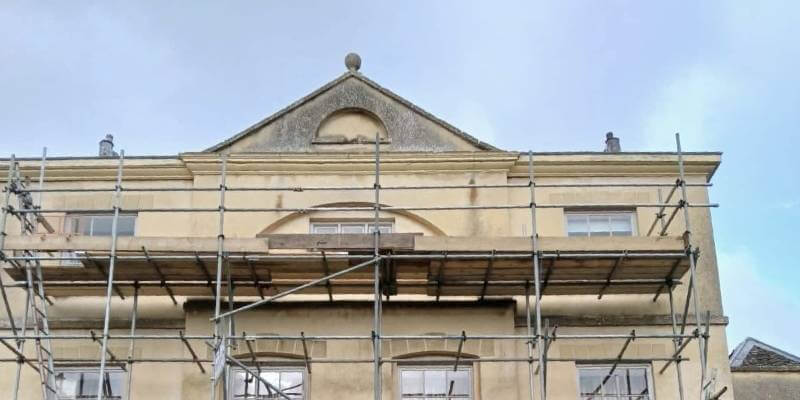
Working platforms should be fully boarded and suitable for the task. Loose boards, gaps or uneven surfaces can create trip hazards. Guardrails and toe boards should be fitted where needed to help prevent falls and reduce the risk of tools or materials falling from height.
A safe scaffold should include:
* Secure working platforms
* Guardrails where required
* Toe boards to help prevent falling objects
* Safe ladder access
* Stable foundations
* Correct ties, braces and anchors
* Clear access routes
* Regular inspections
* Clear communication on site
For more guidance on common scaffold hazards, you may also find our previous article, Scaffolding Guide: How Can Hazards Associated With Scaffolds Be Controlled?, helpful. It explains the main risks associated with scaffolding and how to manage them safely.
Foundation & Stability
A scaffold is only as safe as the support beneath it. Foundation and stability are key parts of scaffolding safety, especially on uneven, soft or sloping ground.
Scaffolds must sit on firm and level foundations. If the ground is soft, uneven or likely to move, base plates and sole boards may be needed to spread the weight. This helps stop the scaffold from sinking, leaning or becoming unstable.
Solid ground is especially important when the scaffold will carry heavy loads, such as tools, materials or several workers. It is also important to consider how long the scaffold will remain in place, as weather and ground movement can affect stability over time.
Scaffolds may also need to be tied, braced or anchored to a permanent structure, such as a building wall. This helps prevent movement, swaying or tipping. The number and position of ties will depend on the scaffold’s height, design, and site conditions.
Overhead clearance is another important point. Scaffolding should be kept at a safe distance from power lines and other aerial hazards. Contact with live electricity can be extremely dangerous, so this should always be considered during planning.
Scaffold Inspections
Scaffold inspections are an important part of keeping a site safe. According to the HSE’s scaffolding guidance, scaffold inspections must be carried out by a competent person with the right knowledge, training and experience for the type and complexity of the scaffold.
A scaffold used for construction should be inspected before its first use and at least every 7 days until it is removed. It should also be inspected after anything that could affect its safety, such as bad weather, damage or substantial alteration.
During an inspection, the competent person should check areas such as:
- The overall scaffold structure
- Working platforms
- Guardrails and toe boards
- Access points
- Ties and braces
- Foundations
- Signs of movement, damage or missing parts
A scaffold should not be assumed safe just because it looks fine from the ground. Regular inspections help identify problems early and keep the site safer for everyone.
For homeowners, it is reasonable to ask your scaffolding company how inspections are managed. For commercial clients, inspection records may also be needed as part of wider site safety paperwork.
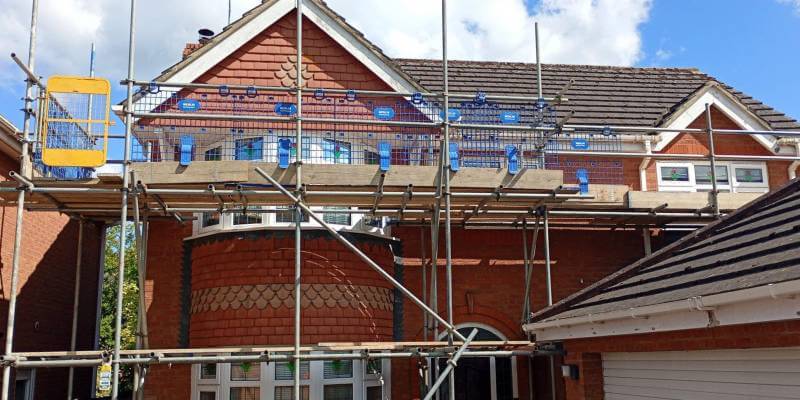
Fall Prevention And Safe Access
One of the main reasons scaffolding is used is to reduce the risk of falls during work at height. However, the scaffold must be designed and used correctly to provide this protection.
Guardrails are one of the most important fall prevention measures. They help stop workers from stepping or falling from the edge of a platform. Toe boards also help by stopping tools and materials from being knocked off the platform.
The working area should be wide enough for the task and kept clear of unnecessary clutter. Materials should be stored safely and should not block walkways or ladder access. Workers should also avoid overreaching, as this can affect balance and increase the risk of falling.
Safe access is just as important as the platform itself. Ladders should be secured, positioned correctly and used only for access. Where needed, access towers, staircases or ladder bays should be included in the scaffold plan.
Public Safety And Surrounding Areas
Scaffolding can affect more than just the people working on it. It can also affect neighbours, visitors, pedestrians and the public. This is why public safety should always be considered before scaffolding is erected.
If scaffolding is near a pavement, road, shop entrance or public route, extra care may be needed. This could include barriers, warning signs, lighting or protective measures. If the scaffold is placed on public land, local authority permission may also be required.
Falling objects are another important risk. Tools, fixings, and materials should be stored properly and not left near edges. Toe boards, brick guards, debris netting or sheeting may be used where needed to help control this risk.
For residential projects, it is also worth thinking about neighbours. Scaffolding can affect access, privacy and shared spaces, especially in terraced or semi-detached properties. Clear communication can help prevent misunderstandings and keep the project running smoothly.
Weather And Scaffolding Safety
Weather can have a big impact on scaffolding safety. Wind, rain, frost, and snow can all affect how safe a scaffold is to use.
Strong winds are a major concern, especially if the scaffold has sheeting, netting or signage attached. These can catch the wind and place extra pressure on the structure. In poor weather, work may need to stop until conditions improve and the scaffold has been checked.
Rain can make boards slippery and may soften the ground beneath the scaffold. Frost and ice can create slip hazards on ladders, boards and access points. This is why conditions should be checked before the scaffold is used.
If there is any doubt about whether a scaffold is safe after bad weather, it should be inspected before work continues.
What To Ask Before Hiring A Scaffolding Company
Before hiring a scaffolding company, asking a few simple questions can help you choose the right team.
You may want to ask:
- Are your scaffolders trained and competent?
- Do you assess the site before installation?
- Will the scaffold be suitable for the work being done?
- Are inspections included?
- How often will the scaffold be checked?
- Do you have relevant insurance?
- Will permits be arranged if needed?
- How do you manage public safety?
- What safety accreditations do you hold?
- Who should I contact if I have a concern?
A good scaffolding company will not mind these questions. In fact, they should welcome them. Safety is a shared responsibility, and clear communication from the start helps everyone understand what to expect.
At Merlin Scaffolding, we know hiring scaffolding can feel like a big step, especially if you have not needed it before. That is why we keep the process clear, friendly and straightforward. We will talk you through what is needed and provide practical advice tailored to your property, project, and timescale.
Book Scaffolding With Confidence
Scaffolding Safety should always be one of the first things you think about before starting work at height. A safe scaffold protects workers, supports the project and gives everyone greater confidence that the job can be completed properly.
Before hiring a scaffolding company, take time to ask about training, inspections, planning, insurance and safety standards. The right team will be able to explain everything clearly and help you understand what is needed.
If you’re looking for professional scaffolding in Milton Keynes, Merlin Scaffolding is here to help. As experienced scaffolders in Milton Keynes, we provide safe, reliable, and well-planned scaffolding solutions for domestic and commercial clients. Get in touch with our friendly team today to book your free site survey and talk through your project.