
If you’re planning roof repairs, a loft conversion or major building work, keeping your property protected from the weather is an important consideration. Removing part of a roof can leave your building exposed to rain, wind and other conditions that could delay work or cause damage. Temporary roof scaffolding provides a protective covering while construction takes place, but how much should you expect to pay?
Temporary roof scaffolding costs can vary depending on your property’s size, the type of structure needed and how long it will be in place. Understanding these costs can help you plan your budget and avoid unexpected expenses. In this article, we’ll use our experience as a trusted scaffolder in Milton Keynes to explain what affects the price and what to consider before booking your installation.
Temporary Roof Scaffolding Costs: What Should You Expect?
Temporary roof scaffolding costs depend on several factors, including the size of your property, the complexity of the roof and the materials required. A small residential project may only need a straightforward covering, while larger buildings or unusual roof shapes can require more detailed planning and specialist equipment.
Unlike traditional access scaffolding, temporary roof systems create a covered working area above the building. This helps protect exposed sections from the weather while giving builders and roofers a safer environment in which to work.
Although installing a temporary roof involves an additional expense, it can help prevent costly delays and reduce the risk of water entering your property. This is particularly useful during major renovations when the existing roof may need to be removed for several weeks.
Before requesting a quote, it’s worth understanding what you’re paying for and how these structures are installed. In this article, we’ll be covering:
- What Is Temporary Roof Scaffolding?
- How Much Is A Temporary Scaffold Roof?
- What Factors Affect Temporary Roof Scaffolding Costs?
- How To Erect Temporary Roof Scaffolding
What Is Temporary Roof Scaffolding?
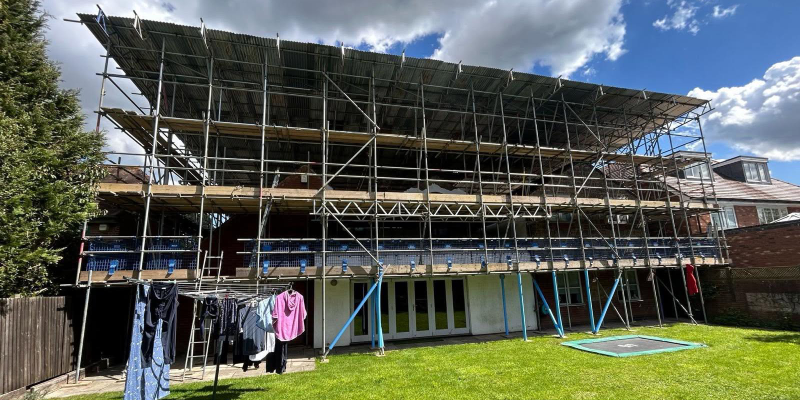
Temporary roof scaffolding is a protective structure installed above a building during construction, maintenance or renovation work. It is supported by a scaffolding system and covered with suitable materials to help shield the property from rain and other weather conditions.
Unlike standard scaffolding, which mainly provides access to elevated areas, temporary roof scaffolding creates a sheltered space where work can continue while sections of the existing roof are exposed.
These structures can be designed in different shapes and sizes to suit the building. They commonly use lightweight beams, supporting scaffolding and protective roof coverings, although the exact materials depend on the project’s requirements.
Temporary roofs are particularly useful for projects where leaving the building exposed could cause damage. Some of their most common uses include:
- Roof Replacements: Protecting the property while old roofing materials are removed and replaced.
- Loft Conversions: Providing shelter while the roof structure is altered to create additional living space.
- Property Extensions: Keeping exposed areas protected during structural alterations.
- Commercial Renovations: Covering larger buildings while major repairs or construction work takes place.
- Restoration Projects: Helping protect older buildings when existing roofing materials need repairing or replacing.
One of the biggest benefits is that work may continue during periods of poor weather, provided conditions remain safe. This can reduce delays and help contractors stay closer to their planned schedule.
Temporary roof scaffolding can also offer additional protection for materials and equipment stored beneath the covering. However, it must be designed and installed correctly to provide suitable weather protection.
How Much Is A Temporary Scaffold Roof?
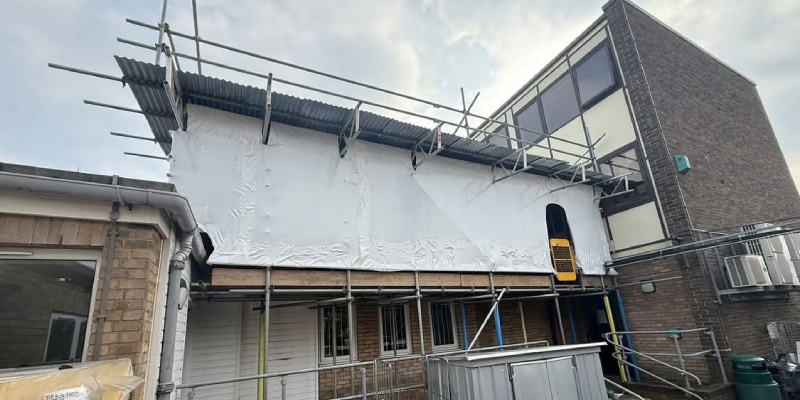
As a general guide, temporary roof scaffolding can cost between £3,000 and £30,000, although particularly large or complex projects may cost more. These figures are indicative, and the final price will depend on your property’s requirements.
For example, a temporary roof installed over a small residential property will generally cost less than one covering a large commercial building. The size, design, materials and installation time will all influence the overall price.
The length of hire is another important consideration. Some roofing projects may only require temporary protection for a few weeks, while major renovations could need several months.
A professional scaffolding quote may include several costs:
- Materials: The scaffolding structure, roof beams, fittings and protective coverings.
- Installation: The labour required to erect the supporting scaffold and temporary roof.
- Design: Any specialist drawings or structural calculations needed.
- Hire Period: The agreed length of time the structure will remain in place.
- Inspections: Safety checks required during the hire period.
- Dismantling: Safely removing the structure once work is complete.
It’s important to check which services are included in your quote, as pricing arrangements can vary between companies.
For a wider understanding of scaffolding prices, our previous article, What Is The Cost Of Scaffolding?, explains how different structures, property types and hire periods can influence the price.
The best way to receive an accurate estimate is to arrange a professional site survey. This allows the scaffolding company to assess your building and recommend a suitable structure before providing a detailed quote.
What Factors Affect Temporary Roof Scaffolding Costs?
Every building has different requirements, which means temporary roof scaffolding costs can vary considerably between projects. Understanding the main factors behind the price can help you budget more accurately.
Property Size And Roof Dimensions
The size of the area requiring protection is one of the biggest factors affecting the price. Larger buildings need more materials, supporting scaffolding and labour to create a suitable covering.
The width of the roof also matters. Wider spans may require stronger beams, additional supports or specialist designs to keep the structure stable.
Complexity Of The Structure
Not every property has a simple roof shape. Buildings with several roof levels, extensions, chimneys or unusual layouts can be more complicated to cover.
These projects may require additional planning, specialist components and more installation time.
The Health and Safety Executive’s guidance on temporary works explains why temporary structures must be properly designed and managed to remain safe throughout construction.
Length Of Hire
The longer your temporary roof remains in place, the more your overall hire costs may increase.
A straightforward roof replacement could take a few weeks, while a larger renovation may last several months. Unexpected repairs, material delays or changes to the project can also extend the hire period.
Before agreeing to a quote, ask whether additional charges apply if the structure needs to stay in place longer than planned.
Property Access And Location
Access to your property can also affect the cost. Buildings with narrow driveways, restricted parking or limited space around them may be more challenging to work on.
If materials cannot be delivered close to the installation area, additional labour or specialist lifting equipment might be needed.
Properties near public footpaths or roads may also require extra safety measures. Where scaffolding occupies a public highway, a licence will normally be required.
The government’s scaffolding rules explain the requirements for scaffolding on public highways and the permissions that may be needed.
Materials And Weather Protection
Temporary roofs can use different covering systems depending on the building and the work taking place.
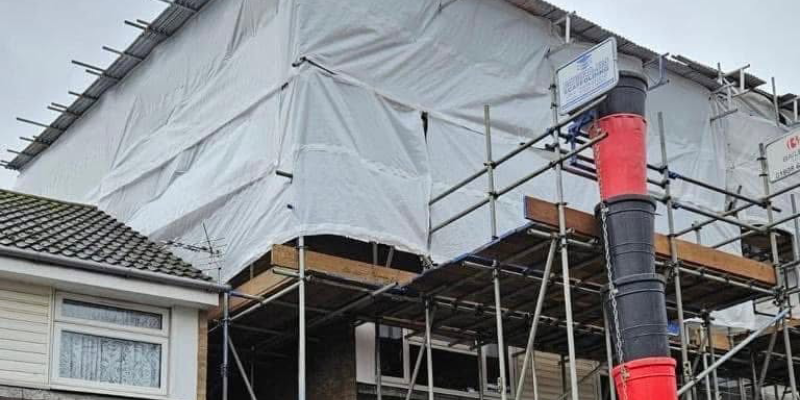
Some projects may require reinforced sheeting, while others need more specialised roof coverings. The chosen materials can affect the overall cost, especially when additional support is required.
The structure must also be designed to withstand the weather conditions it may face. Protective sheeting can increase wind loads, so choosing the correct system is important for safety.
Additional Safety Requirements
Health and safety should always be considered when budgeting for temporary roof scaffolding.
Complex installations may need specialist designs, additional edge protection or extra safety equipment. Structures must also be inspected and maintained throughout their use.
While these requirements can affect the price, they are essential for protecting workers, the building and anyone nearby.
At Merlin Scaffolding, safety is at the heart of how we work. We’re proud to hold Avetta Accreditation and work closely with C&S Consulting, our health and safety partner. Their support helps us maintain high standards and continue improving our approach to safe working practices.
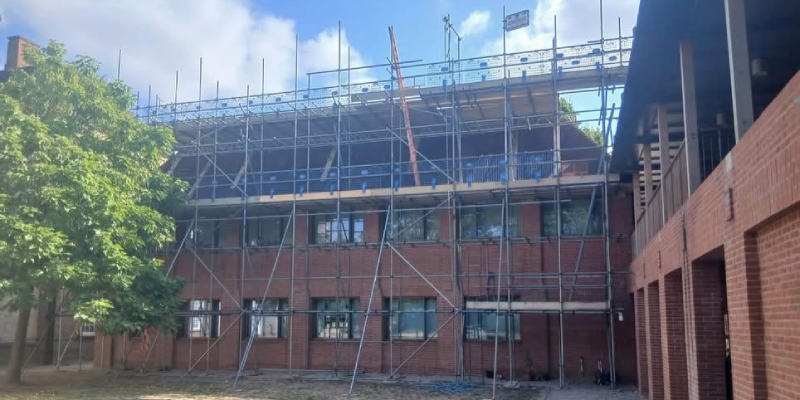
How To Erect Temporary Roof Scaffolding
Erecting temporary roof scaffolding requires careful planning, specialist equipment and trained professionals. The structure must be strong enough to support the roof system and withstand the loads it may face throughout the project.
Although the installation process depends on the building, there are several key stages involved.
1. Site Survey And Planning
Before installation begins, the scaffolding company will assess the property and identify any potential hazards.
This includes checking the building’s dimensions, ground conditions, access routes and surrounding areas. The team will also consider how the temporary roof will be supported and whether specialist design calculations are required.
2. Installing The Supporting Scaffold
Once the design is agreed, trained scaffolders can begin constructing the supporting structure.
The scaffold must have suitable foundations, bracing and ties or anchors where required. Safe access routes and working platforms will also be installed according to the project’s needs.
3. Constructing The Temporary Roof
The roof beams are assembled and positioned according to the approved design. Larger structures may require specialist lifting equipment to move sections safely into place.
The protective covering is then secured to the framework to provide the required weather protection.
4. Inspecting The Structure
Before the scaffold is used, it must be checked by a competent person to confirm it is safe and suitable for the intended work.
The HSE’s scaffolding guidance explains the requirements for scaffold design, safe installation and inspections. Construction scaffolds subject to the relevant inspection requirements must be checked before first use, at least every seven days and after events that could affect their safety.
Regular checks are particularly important following severe weather, as strong winds or other conditions may affect the structure.
Temporary roofs should only be erected, altered and dismantled by competent professionals. Attempting to adjust the structure without proper training can create serious safety risks.
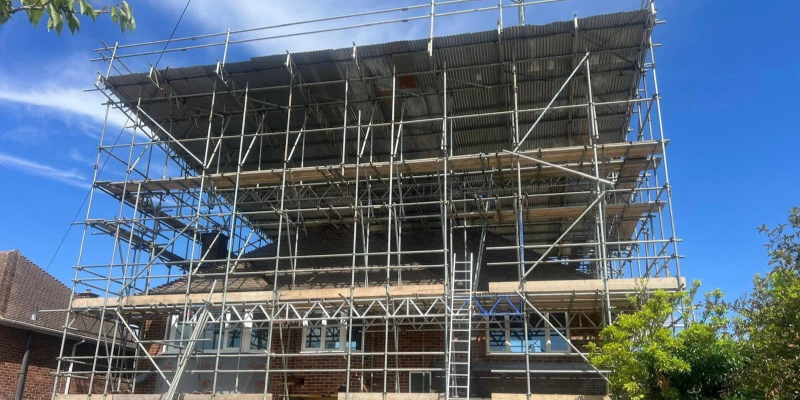
Protect Your Project With Merlin Scaffolding
Temporary roof scaffolding can be a valuable investment when carrying out roofing repairs, extensions or major building work. Although prices depend on several factors, choosing a suitable structure can help protect your property and reduce weather-related disruption.
The key is to plan early, understand what your quote includes and work with an experienced scaffolding company that puts safety first.
At Merlin Scaffolding, we have over 20 years of experience providing safe and reliable scaffolding in Milton Keynes and surrounding areas. Our friendly team can help you understand your options and recommend a temporary roof solution suited to your property and project.
Get in touch with us today to arrange your free site survey and receive a tailored quote for your temporary roof scaffolding.